1. Outline
| Country Name |
The Republic of the Sudan MAP |
| Capital |
Khartoum |
| Population |
355.2 million (2004) |
| Area |
2.5 million k㎡ (the largest in Africa) |
| Ethnic Groups |
Arab 40%, African 31%, others (ナイロン・ハム等) |
| Languages |
Arabic (official), English |
| Religion |
Muslim (North), Christian (South), indigenous |
| Source |
Ministry of Foreign Affairs of Japan |
2. Conflict Issues/Needs
The End of the Long Civil War and Mass Influx
of Returnees
The Sudanese government and the Sudan People’s Liberation Movement
(SPLM) finally reached a peace agreement in January 2005 after
twenty years of civil war. This agreement granted the autonomy
of the South Sudan. Consequently, 3.7 million of internally
displaced persons (IDP) and 350 thousand refugees started to
return to their place of origin. 96,508 refugees repatriated
in 2006, and another 102,000 are estimated to return in 2007.
Returnees’ Sanitary Environment in Need
90% of refugees from Uganda and 40% from Congo return to the
State of Central Equatoria in Sudan. However, many individuals
have already perished from cholera in the State; 539 died among
the 18,021 cases in 2006. While the cholera epidemic worsens
constantly, the repatriation from Uganda is expected to accelerate
even more rapidly during the coming dry season of 2007.
It is above all vital for the local community to ameliorate a
basic water sanitary environment in the province. Many
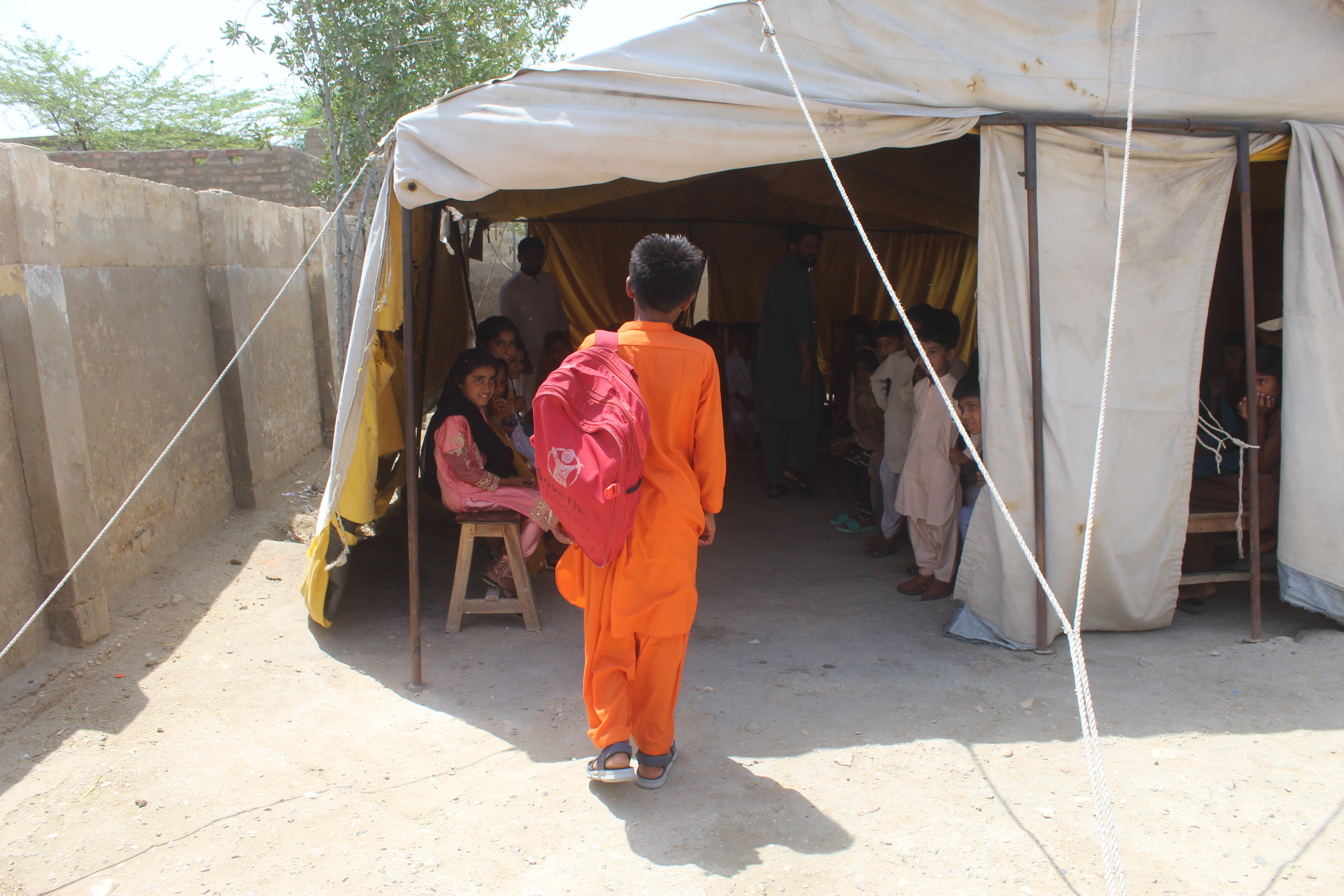
children are infected with diarrhea due to unclean water, having
no toilets in their school. There are often disputes among
people while they are waiting to draw water from the well. Worse,
animals have contaminated drinking wells.
| 2) Our activities
in Sudan |
1. JEN's Assistance Program Policy
The State of Central Equatoria is strategically important for
the sustainable development of the South Sudan. The State,
receiving a large number of returnees, situates also as a pivotal
transit area for refugees on their way to other States in the
South Sudan. Our primary concerns are in marginalized villages
in which no governmental and international relief agencies have
arrived. JEN decided to intervene in Terekeka and Lainya,
two counties especially in need.
2. Current Projects
Hygienic Education Project
JEN aims to ensure that there is a basic knowledge of sanitation
in the local community. To do this, first of all, our team
will visit each school to estimate their current understanding
of and practices for hygienic conditions. Next, the staff
will prepare original teaching materials for hygienic education
appropriate for local needs. Then, JEN will use the materials
for lessons for children and for training teachers respectively. We
are also planning to organize theater workshops for both teachers
and students that would involve them in learning through active
interaction.
School Sanitation Projects
JEN also aims to set up basic sanitary systems in those schools
that are inadequately prepared for the coming dry season. The
system will include drinking wells, water pumps, and drainage
gutters. To do this, our team will choose target schools
in close collaboration with the Sudanese Ministry of Education
and after correct investigation of school conditions. Influential
factors, for example, include the distance from the nearest source
of water, the number of children and the number of cases among
them of epidemic diseases. In addition, follow-up trainings and
preventive measures are essential for our principles of community-wide
development; such as, building animal-guard fences around new
wells, and ensuring sustainable maintenance mechanisms by teachers.
School Hygienic Infrastructure Project
The State of Central Equatrea has some 560 thousands habitants
and 404 schools. Some schools do not have proper school
buildings; only 31% have toilets; barely 40% have a water source
within 500m. The National Educational Budget, gives priority
to the salary of teachers and the costs of school construction,
and therefore is not able to finance sanitary infrastructure
at the same time. The government therefore welcomes international
assistance in rural areas that municipal grants are still unable
to cover. JEN will construct the toilet equipment for boys,
girls and teachers respectively in those schools in primary need.

Soudan
I. Aperçu Géopolitique
| Nom du Pays |
République du Soudan Plan |
| Capitale |
Khartoum |
| Population |
41,236,378 (2006) |
| Superficie |
2.5 million km2 (le plus grand en Afrique) |
| Groupes Ethniques |
Arabes (40%) |
| Langues |
arabe (officielle), anglais |
| Religions |
Islam (nord), christianisme (sud), indigènes |
Source : Ministère des Affaires Etrangères du Japon
II. Contexte Historique
<La fin de la Guerres Civile et l’Afflux Massif de Rapatriés>
Le gouvernement soudanais et le Mouvement de Liberation du Peuple
du Soudan (MLPS) ont finalement signé un accord de paix en janvier
2005 après une guerre civile qui aura duré plus de vingt ans. Au
total plus de 3.7 million de déplacées internes (PDI) et 350
000 de réfugiés ont commencé à être rapatriés dans les régions
du sud.
 |
 |
-
III. Besoins des Rapatriés
-
A. Environement Sanitaire
Pour une majorité des 90% de Soudanais réfugiés en
Ouganda et 40% de ceux qui étaient au Congo sont retourné
dans la province de l’Equateur au centre du Soudan. Beaucoup
d’entre eux souffrent due choléra qui a provoqué plus de
539 décès sur les 18 021 cas enregistrés dans cette province
en 2006. Alors que l’épidémie fait toujours ravage au sein
des rapatriés, le retour de l’Ouganda devra être accéléré
pendant la saison sèche de 2007. L'accès à l'eau potable
est une des priorités recensées, afin d'éviter le choleras
et toutes maladies transmissibles par l'eau.
 |
 |
La province de l’Equateur Central est stratégique pour le
développement durable au sud du Soudan. Compte tenu du fait
que cette province, accueille un grand nombre de rapatriés
et constitue aussi une zone pivot de transit pour le rapatriement
vers les autres régions du sud Soudan ; nous avons donné
priorité aux villages marginalisés et difficile d'accés.
JEN actuellement est présente à Terekeka et Lainya, deux
cantons particulièrement affectés par les problemes liés
à l'eau.
(1) Projets en Cours
-
A. Projet de sensibilisation à l'Hygiène
dans les ecoles
JEN estime que la communauté locale dispose des connaissances
élémentaires de santé publique. Notre équipe s’attèle à évaluer
les coutumes, les pratiques et les habitudes hygiéniques
applicables à chaque école. JEN prépare aussi les matériaux
didactiques pour l’éducation à l’hygiène en fonction des
besoins des populations locales. Pour l’apprentissage, nous
allons organiser des ateliers de théâtre au sein desquels
les enseignants et les enfants apprennent ensemble et de
manière interactive les règles de santé publique.
 |
 |
B. Projet d’Infrastructures Sanitaires
à l’Ecole
Notre projet au sud Soudan comprend aussi l'installation
d'infrastructures sanitaires (puits, canaux d’adduction et
des égouts) dans les établissements scolaires avant la prochaine
saison sèche. Nos équipes sur place choissent les écoles
cibles en collaboration avec le Ministère de l’Education
et l'UNICEF. JEN pour la sélection des écoles a établis
des critères parmi les indices à prendre en considération,
la distance entre la source d’eau et le village plus proche,
le nombre d’enfants scolarisés et ceux affectés par l’épidémie.
Par principe, notre intervention sera orientée vers le développement
durable des communautés locales. Nous assurerons les mesures
préventives (clôturer les puits pour les protéger des animaux),
formation continue aux enseignants, et, nous mettrons en
place un système de cogestion avec les enseignants.
 |
 |
C. Projet d’infrastructures hygiéniques
pour les écoles
La province de l’Equateur Central a quelques 560 000 habitants
et 404 écoles. Cependant, un certain nombre des écoles n’ont
pas de bâtiments. 31% seulement d’entre elles sont dotées
de toilettes et seulement 40% ont une source d’eau dans un
rayon de 500m. Le budget national pour l’éducation, consacré
en priorité au salaire des enseignants et à la construction
des écoles, est incapable de financer les infrastructures
sanitaires. Le gouvernement soudanais favorise donc l’assistance
internationale dans les zones rurales dont les écoles ne
sont pas suffisamment couvertes par le bourse municipale.
JEN s’engage à construire des toilettes pour les élèves et
les enseignants dans les écoles où le besoin se fait sentir.